The Virginia Family Nutrition Program works with many audiences and partners to best meet the needs of each unique community. From rural communities in Appalachia to larger urban areas like Richmond and Arlington, we offer nutrition education programs and healthy living strategies to Virginians.
Adult Programs
Eating Smart, Being Active
Eating Smart, Being Active (ESBA) is the curriculum offered to adult caregivers of young children with low incomes. ESBA lessons encourage adults to make healthy nutrition and lifestyle choices. The program is discussion-based, includes hands-on activities like cooking and meal planning, and offers practical advice for making healthy behavior changes for the entire household.
In the Kitchen

In the Kitchen is designed to equip adults, ages 18 – 25 years old, with basic cooking skills, boosting their confidence to prepare simple, low-cost, and nutritious meals at home. The curriculum emphasizes hands-on cooking, focusing on knife safety and skills, measuring basics, recipe reading, and simple cooking techniques. It also covers key concepts in food safety, nutrition, food resource management, and physical activity. In the Kitchen was largely adapted from
Virginia Cooperative Extension’s evidence-based Teen Cuisine program.
Youth Programs
Choose Health: Food, Fun, and Fitness
Choose Health: Food, Fun, and Fitness is a curriculum for 3rd through 5th graders designed to encourage students to replace sweetened drinks with low-fat milk and water, eat more vegetables, fruits, and whole grains, eat fewer high-fat and high-sugar foods, and be more active.
Eat Smart Virginia
 Eat Smart Virginia was developed by the Virginia Cooperative Extension Family Nutrition Program to teach youth in grades 6 – 12 important life skills to promote optimal health now, and in the future. The curriculum addresses key concepts about nutrition, food resource management, food safety, and physical activity using approaches and strategies that enhance learning and empower behavior change among teens. Eat Smart Virginia was designed with adolescents in mind, aiming to appeal to their interests (takeout foods, snacking, sports drinks, etc.),
as well as documented areas for improvement.
Teen Cuisine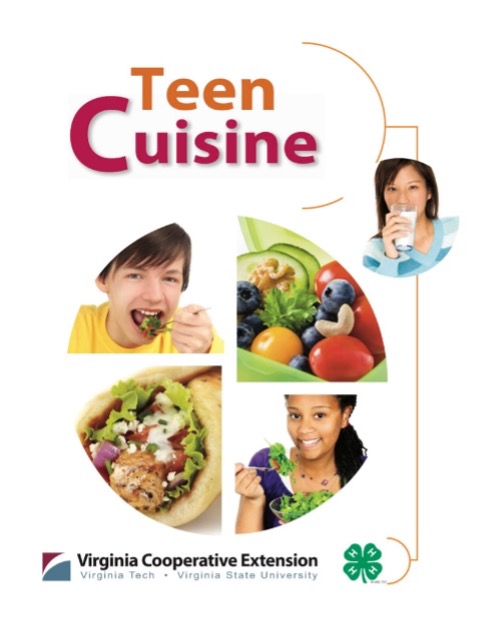
Teen Cuisine is a hands-on cooking program created by the Virginia Cooperative Extension Family Nutrition Program teaches students in grades 9 – 12 important life skills that will stay with them as they grow into adults. Lessons cover how to choose healthy foods and prevent foodborne illness. With a cooking demonstration in each lesson, students learn by doing. Students learn the basics of MyPlate, importance of handwashing, basic knife safety, how to read food labels and choose healthy foods, how to make smart food choices when eating out, the health effects of different fats, how to plan meals and how to practice food safety.
Over its 10-year history, Teen Cuisine has been adopted by a large number of state-level Extension programs. Teen Cuisine is available for purchase at: https://ext.vt.edu/4h-youth/healthy-living/teen-cuisine.html
More information can be found here: Price TT, Carrington AS, Margheim L, Serrano E. Teen Cuisine: Impacting Dietary Habits and Food Preparation Skills in Adolescents. J Nutr Educ Behav. 2017 Feb;49(2):175-178.e1. doi: 10.1016/j.jneb.2016.10.008. Epub 2016 Nov 18. PMID: 27876322.
Community Programs
Including Food Access and Policy, Systems, and Environmental (PSE) Change Initiatives
Interested in supporting access to affordable and nutritious foods in partnership with food pantries, schools, farmers markets, food stores, community gardens, and local communities?
Virginia Cooperative Extension offers training and support across the state through the Family Nutrition Program Food Access Initiative. The Food Access Initiative builds upon educational programs to offer comprehensive and transformative policy, systems, and environmental (PSEs) changes that ensure reliable, consistent access to nutritious food for neighbors and communities.
Training and technical assistance includes:
• Training and Certification
• Guides to Partnerships to Support Food Access and PSEs
• Resources to Support Food Access and PSEs
• Approaches to Promote Dignity
• Assessment and Evaluation Tools
For more information, contact: Meredith Ledlie Johnson, meredil@vt.edu.